Non-Linear Movies Ranked: The Ultimate Guide for 2026
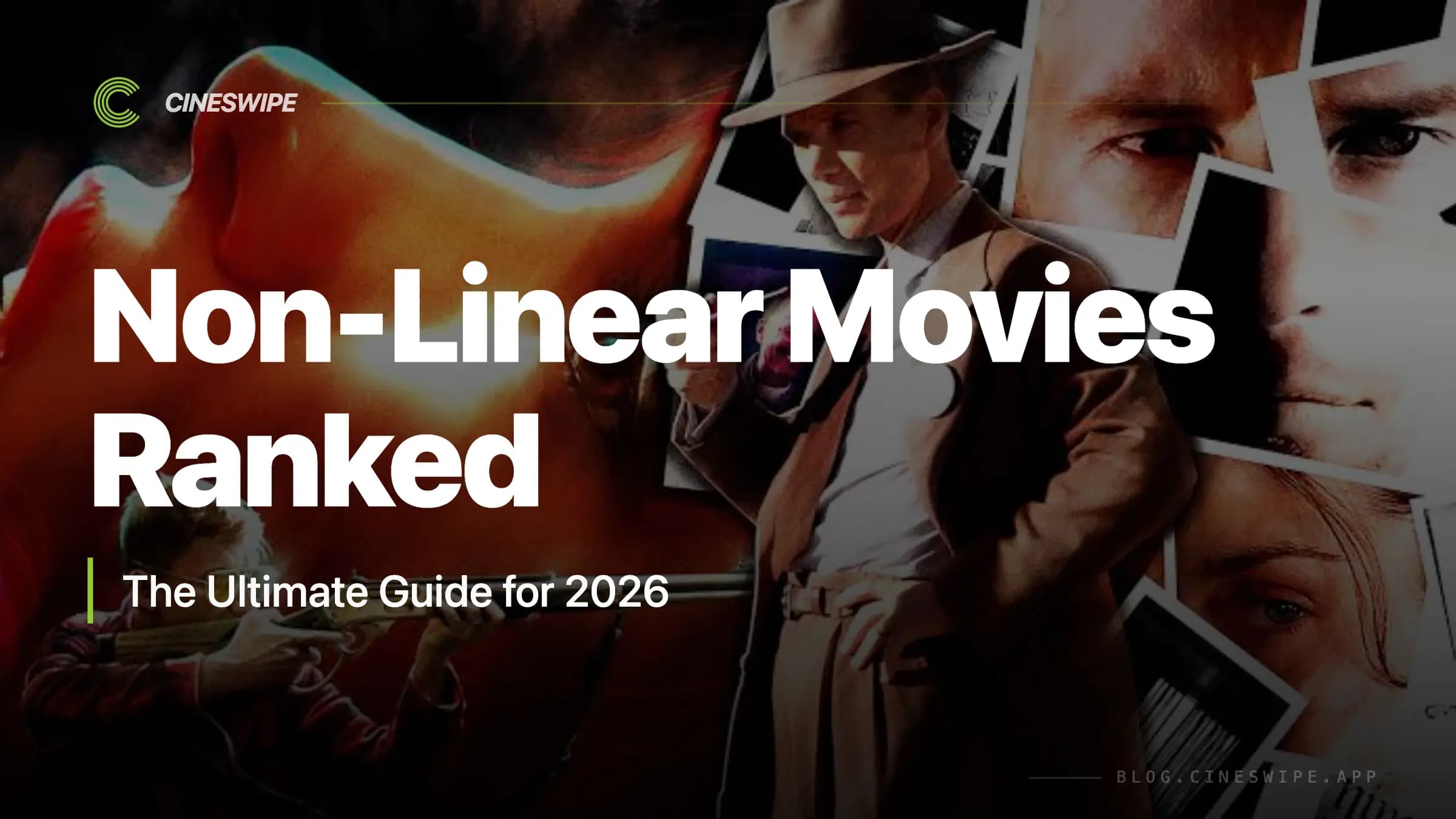
The screen fades to black, but the story is already over, or perhaps it has only just begun. When you watch a masterpiece that shatters chronological order, you are not just a spectator; you are an active detective putting together a narrative jigsaw puzzle. If you are looking for the absolute best non-linear movies ranked by how brilliantly they bend time, you have come to the right place to cure your decision fatigue.
Why do filmmakers use non-linear storytelling in cinema?
Filmmakers use non-linear storytelling to mirror the fragmented way the human mind experiences memory, trauma, and anticipation. By breaking chronological order, directors can create suspense, reveal character motivations at precise emotional moments, and force the audience to actively piece together the plot puzzle rather than passively watching it unfold.
When Christopher Nolan structured Memento (2000) in reverse, he was not just showing off. He wanted you to feel the exact disorientation of short-term memory loss. Every time a new scene starts, you have no idea how you got there, mirroring the protagonist's fragile mental state. Similarly, Denis Villeneuve utilizes fractured time in Arrival (2016) to explore how language shapes our perception of existence itself. It is a cinematic trick that, when done right, elevates a simple plot into an unforgettable intellectual experience.
If you love this style of storytelling, you have likely run into the classic problem of finding your next watch. You scroll through streaming services for an hour, only to end up watching nothing. That is why we built Cineswipe. Instead of scrolling, you can tell Cinebot, "I want a sci-fi mystery with a timeline that breaks my brain," and it will instantly search across all your streaming platforms to find the exact match.
What are the best non-linear movies ranked for 2026?
Our non-linear movies ranked list for 2026 places Christopher Nolan's Memento at the top, followed closely by Denis Villeneuve's Arrival, Quentin Tarantino's Pulp Fiction, and Michel Gondry's Eternal Sunshine of the Spotless Mind. These films are ranked based on their narrative complexity, emotional resonance, and structural execution.
To help you find your next mind-bending watch, here is a breakdown of the top complex timeline movies that masterfully manipulate chronological order:
1. Memento (2000)
Nolan’s breakout masterpiece remains the gold standard of reverse chronology. The black-and-white sequences move forward, while the color sequences move backward, meeting in a devastating middle. It is a masterclass in subjective perspective.
2. Arrival (2016)
Villeneuve turned a sci-fi first-contact story into a deeply emotional meditation on grief and time. The non-linear structure is not just a gimmick; it is the literal language of the story. If you want more emotional depth with your sci-fi, this is the peak.
3. Pulp Fiction (1994)
Tarantino proved that circular timelines could be incredibly cool and deeply funny. By splitting his crime anthology into distinct, overlapping chapters, he created a cinematic rhythm that changed independent cinema forever.
How do complex timeline movies challenge our perception of time?
Complex timeline movies challenge our perception of time by dismantling the traditional cause-and-effect narrative structure. By presenting the effect before the cause, these films force our brains to re-evaluate how events connect, highlighting how memory, emotion, and destiny are rarely linear in our actual lived experiences.
Think about Eternal Sunshine of the Spotless Mind (2004). The film takes place almost entirely inside Joel’s crumbling mind as he systematically erases memories of his ex-girlfriend. We watch their relationship disintegrate in reverse, starting with the bitter end and ending with the beautiful, fragile beginning. By the time we reach the start of their love story, the emotional weight is crushing because we already know how it ends. This structural choice turns a simple romance into a profound psychological journey.
When you are in the mood for these brain-teasing narratives, the search can be exhausting. Cineswipe solves this by allowing you to filter your search by mood, era, and streaming platform. Cineswipe syncs with Trakt, Simkl, and TMDB to track viewing progress across 50+ streaming platforms. This means you can keep your watchlist organized no matter how chaotic the movie timelines get.
Which movies like Interstellar should you watch next?
If you love movies like Interstellar, you should watch Ad Astra (2019), Coherence (2013), Contact (1997), and Tenet (2020). These films combine grand cosmic scale, theoretical physics, or mind-bending concepts with deeply personal human stories, capturing that same sense of awe and cerebral mystery.
Let's break down why these films appeal to fans of Nolan's space odyssey:
| Movie | Key Themes | Why It Matches Interstellar | Where to Find It |
|---|---|---|---|
| Coherence (2013) | Parallel universes, trust, survival | Quantum anomalies in a grounded setting | Prime Video |
| Tenet (2020) | Entropy inversion, espionage, time | Nolan's ultimate play with physical time mechanics | Apple TV |
| Contact (1997) | First contact, faith, space travel | The emotional and scientific journey of space exploration | Max |
| Ad Astra (2019) | Isolation, father-son bond, space travel | A lonely, visually stunning journey across the solar system | Hulu |
If you are struggling to pick between these, you can use the Cineswipe app to narrow down your choices. If your watchlist already has five films like this, your Cineswipe stats know you well and will suggest the perfect match for your weekend movie night.
Why do Nolan and Villeneuve dominate the non-linear genre?
Christopher Nolan and Denis Villeneuve dominate the non-linear genre because they possess the unique ability to marry massive blockbuster budgets with complex, intellectual storytelling. Both directors reject simplistic storytelling, choosing instead to trust their audience's intelligence to piece together intricate, multi-layered cinematic puzzles.
Nolan treats time like physical clay, bending it, reversing it, and stacking it in layers, as seen in Inception (2010) and Dunkirk (2017). Villeneuve, on the other hand, uses time as an emotional mirror, exploring how our perception of reality changes when we look at our lives from the outside. They are two sides of the same brilliant coin, proving that mainstream cinema does not have to be dumbed down to succeed.
To keep track of your journeys through these complex worlds, you need a tool that understands your taste. Cineswipe is available on iOS, Android, and Chrome, ensuring your personalized movie database is always in your pocket. You can swipe through custom cinelists created by fellow film lovers who share your obsession with complex timeline movies.
If you are ready to stop scrolling and start watching, open up the app. Tell Cinebot you're in the mood for something like this, it'll find your exact version in seconds, tailored to the streaming services you actually subscribe to.
FAQ
Answers to common questions related to this article
Many cinephiles consider Shane Carruth's *Primer* (2004) to be the most complex non-linear movie ever made. The film features an incredibly realistic, scientifically dense depiction of time travel that requires multiple viewings and literal timeline charts to fully comprehend.
Inside Cineswipe
Find your next watch, then keep it organized.
Swipe discovery
Likes and skips personalize recommendations over time.
Cinebot
Ask for a mood, genre, runtime, or movies like a favorite.
Watchlist & tracking
Track films and TV episodes, and import your watch history.
Sync & import
Import from Letterboxd, Trakt, Simkl, TV Time, and TMDB; sync with Trakt, Simkl, and TMDB.
Curate, review & share
Create public Cinelists and share polished review posters with your take.
Share this article: