Movie Genres Explained: Guide to Finding Your Taste in 2026
The house lights dim, the projector hums, and you are suddenly staring at a screen that could take you anywhere from a quiet indie kitchen to a neon-drenched cyberpunk alley. If you have ever stared at a streaming menu for forty minutes only to give up and rewatch a sitcom, you are not alone. Understanding how different cinematic styles function is the first step to beating decision fatigue, which is why having movie genres explained is the ultimate key to curating a watchlist you actually love in 2026.
Why is understanding movie genres explained the key to finding your taste?
Understanding how different film categories operate allows you to identify the specific narrative structures, emotional beats, and visual styles that resonate with your personal preferences. Instead of scrolling mindlessly through endless streaming libraries, recognizing these patterns helps you target exactly what you want to watch next. It transforms a chaotic, overwhelming search into a deliberate, satisfying selection process.
When we talk about film categories, we are talking about shorthand for human emotion. A genre is not a cage; it is a promise. It tells you what kind of ride you are signing up for. If you know you love the high-stakes tension of a ticking clock, you are looking for a thriller. If you want to feel the bittersweet ache of human connection, you are looking for drama.
By having these movie genres explained in clear, simple terms, you can finally move past generic labels and start identifying the specific subgenres that make you tick. For example, if you loved the suffocating atmosphere of comfort horror movies, you are not just a horror fan—you are a fan of atmospheric, slow-burn tension. Recognizing these nuances is the secret to building a bulletproof watchlist.
What are the 10 core movie genres you need to know?
The ten core movie genres are Drama, Comedy, Action, Sci-Fi, Horror, Thriller, Romance, Fantasy, Mystery, and Documentary. Each category is defined by specific narrative conventions, thematic elements, and emotional goals designed to evoke a particular response from the audience. Knowing these foundations helps you navigate any streaming platform with confidence.
1. Drama
Drama is the bedrock of cinema, focusing on realistic characters, emotional depth, and intense interpersonal conflicts. These films prioritize character development over high-concept plots. Think of the quiet, devastating moments in Past Lives (2023) or the heavy atmospheric weight of The Zone of Interest (2023). If you want to feel deeply, you want a drama.
2. Comedy
Comedy aims to amuse and provoke laughter. From the sharp dialogue of screwball comedies to the physical absurdity of slapstick, this genre acts as a mirror to our own absurdities. Whether it is a classic or a modern witty satire, comedies are designed to release tension and offer a lighter perspective on life.
3. Action
Action films are defined by high energy, physical stunts, and relentless pacing. The narrative is driven by kinetic movement, chases, and battles. Think of the masterful choreography in John Wick: Chapter 4 (2023) or the dusty, roaring roads of Mad Max: Fury Road (2015). It is pure visceral energy.
4. Science Fiction (Sci-Fi)
Sci-Fi uses speculative technology, space exploration, time travel, or futuristic settings to explore deep philosophical questions about humanity. Masterpieces like Dune: Part Two (2024) use alien worlds to examine very real earthly issues like power, religion, and ecology.
5. Horror
Horror is designed to elicit fear, dread, and alarm. Whether through supernatural entities, psychological terrors, or visceral scares, horror pushes the boundaries of the human psyche. It is a genre that thrives on the unknown and the things that go bump in the dark.
6. Thriller
Often confused with horror, thrillers are built on suspense, anticipation, and anxiety. They keep you on the edge of your seat with ticking clocks, hidden conspiracies, and shifting alliances. If your heart is racing but there are no monsters, you are watching a thriller.
7. Romance
Romance focuses on love, passion, and the obstacles that stand in the way of relationships. From classic meet-cutes to tragic star-crossed lovers, these films explore the complexities of intimacy and connection.
8. Fantasy
Fantasy transports you to magical worlds governed by their own rules, featuring mythical creatures, epic quests, and supernatural systems. Unlike sci-fi, which relies on speculative science, fantasy embraces the impossible and the mythic.
9. Mystery
Mystery centers on a puzzle, a crime, or an unexplained event that must be solved by a protagonist. It invites you to play detective, dropping clues along the way. Think of the delightful, star-studded puzzles of the Knives Out franchise.
10. Documentary
Documentaries offer a non-fictional look at real people, historical events, scientific discoveries, or societal issues. They inform, challenge, and capture the raw truth of our world, proving that sometimes reality is stranger than fiction.
How can you identify your personal movie taste profile?
To identify your personal movie taste profile, start by tracking the films you have previously enjoyed and look for recurring elements such as pacing, tone, and themes. Pay attention to whether you prefer dialogue-heavy stories, fast-paced action, or atmospheric world-building. Analyzing these patterns reveals your underlying cinematic preferences.
An easy way to start is by looking at your favorite films and breaking them down. Do you love Interstellar (2014) because of the spaceships, or because of the emotional father-daughter relationship? If it is the latter, your taste leans more toward human drama than hard science fiction. If you are struggling to spot these patterns yourself, you can tell Cinebot you're in the mood for something like this — it'll find your exact version based on your hidden preferences.
To make this easier, here is a quick comparison of how different genres deliver different emotional experiences:
| Genre | Primary Emotional Goal | Common Pace | Visual Style | Example Film |
|---|---|---|---|---|
| Drama | Deep Empathy & Reflection | Slow to Medium | Naturalistic, intimate | Anatomy of a Fall (2023) |
| Thriller | High Suspense & Anticipation | Fast | Shadowy, high-contrast | Parasite (2019) |
| Sci-Fi | Awe, Wonder & Curiosity | Varied | Grand, imaginative | Blade Runner 2049 (2017) |
| Horror | Dread, Fear & Catharsis | Slow-burn to Sudden | Atmospheric, dark | Hereditary (2018) |
| Action | Excitement & Visceral Thrill | Very Fast | High-motion, bright | Furiosa: A Mad Max Saga (2024) |
Why do subgenres make finding your taste much easier?
Subgenres make finding your taste easier because they narrow down broad categories into highly specific narrative styles and tones. By focusing on a subgenre, you bypass thousands of irrelevant titles and target the exact mood, setting, or storytelling technique you are currently craving. This specificity eliminates streaming indecision.
For instance, "Comedy" is a massive umbrella. You might hate broad slapstick but absolutely adore dry, deadpan mockumentaries. "Horror" contains everything from gory slashers to quiet, psychological dread. When you learn to identify subgenres, you unlock a much more precise way of discovering films.
Consider these popular subgenres and see which ones spark your interest:
- Neo-Noir: Dark, cynical crime dramas with stylish lighting and morally gray characters (e.g., Drive).
- Coming-of-Age: Stories focusing on the psychological and moral growth of a protagonist from youth to adulthood (e.g., Lady Bird).
- Cyberpunk: High-tech, low-life futures dominated by artificial intelligence and neon cityscapes (e.g., The Matrix).
- Cosmic Horror: Stories that emphasize the terror of the incomprehensible and the insignificance of humanity (e.g., Annihilation).
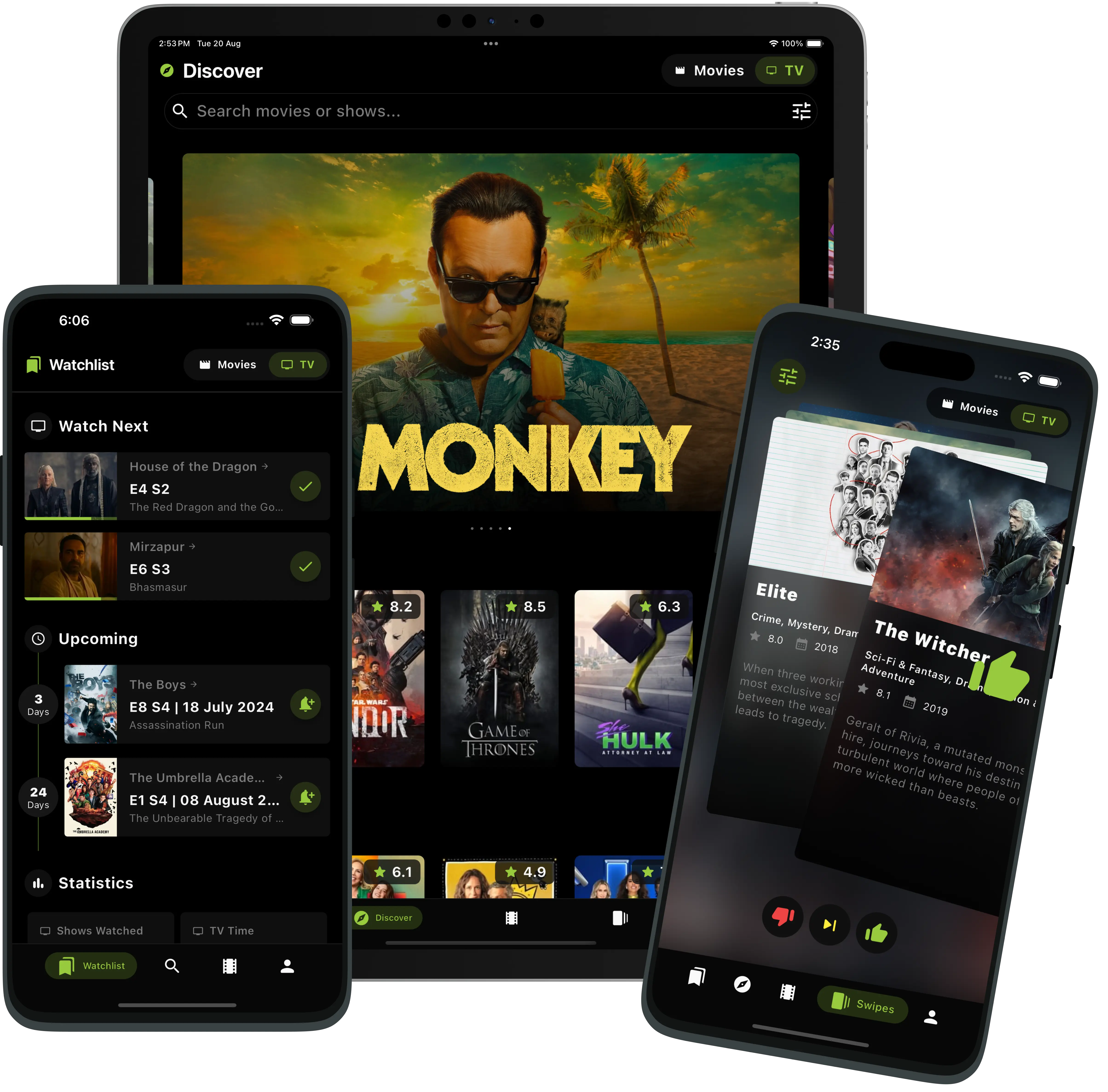
If you find yourself gravitating toward these specific styles, you do not have to search blindly. Cineswipe syncs with Trakt, Simkl, and TMDB to automatically track viewing progress across 50+ streaming platforms. Cineswipe also allows users to filter by exact genres, release years, and streaming platforms to pinpoint their next watch instantly.
How does Cineswipe help you discover new genres effortlessly?
Cineswipe helps you discover new genres effortlessly by using an AI-powered swipe mechanic and conversational search to learn your specific tastes. Instead of scrolling through static lists, you swipe right to like and left to skip, allowing the app to build a dynamic profile of your cinematic preferences over time.
If you are tired of the same old recommendations, the Cineswipe App offers a refreshing alternative to standard streaming algorithms. The app features a powerful conversational assistant called Cinebot. Instead of typing in rigid keywords, you can talk to Cinebot like a friend, saying things like, "I want a sci-fi movie that feels like a quiet drama and has a great soundtrack."
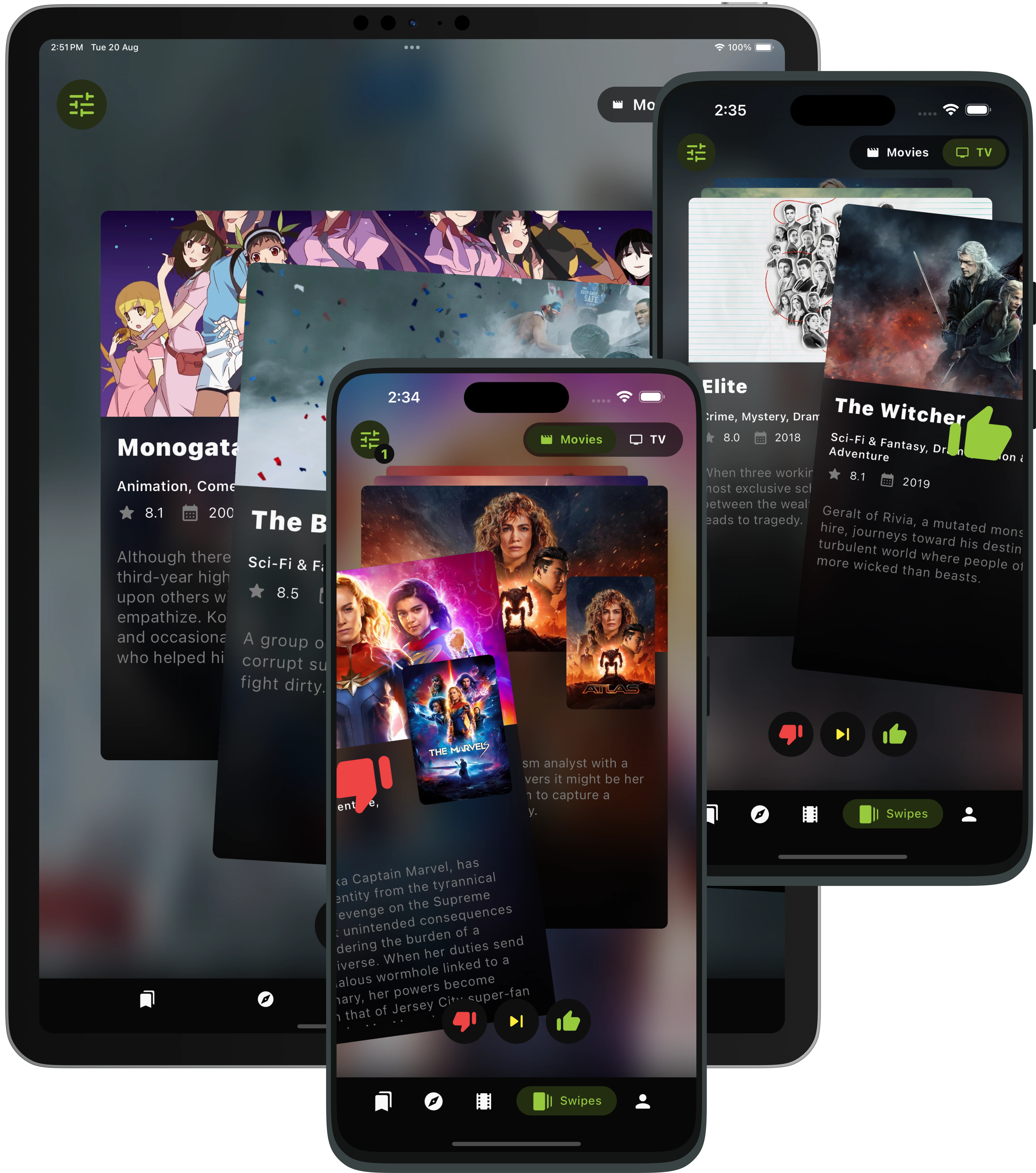
By combining intuitive swiping with advanced AI, you can step out of your comfort zone without risking a wasted evening. If your watchlist already has five films like this, your Cineswipe stats know you well and will suggest adjacent genres you might have never considered exploring on your own.
Ready to stop scrolling and start watching? Let Cinebot know what kind of cinematic mood you are in tonight, and let us find your next favorite film together on Cineswipe.
Frequently Asked Questions
Answers to common questions related to this article
A genre is a broad, overarching category of film, such as Drama or Sci-Fi, that shares general themes and styles. A subgenre is a highly specific niche within that larger category, like Coming-of-Age Drama or Cyberpunk Sci-Fi, which features more defined settings, tropes, and tones.
Inside Cineswipe
Find your next watch, then keep it organized.
Swipe discovery
Likes and skips personalize recommendations over time.
Cinebot
Ask for a mood, genre, runtime, or movies like a favorite.
Watchlist & tracking
Track films and TV episodes, and import your watch history.
Sync & import
Import from Letterboxd, Trakt, Simkl, TV Time, and TMDB; sync with Trakt, Simkl, and TMDB.
Curate, review & share
Create public Cinelists and share polished review posters with your take.
Share this article: